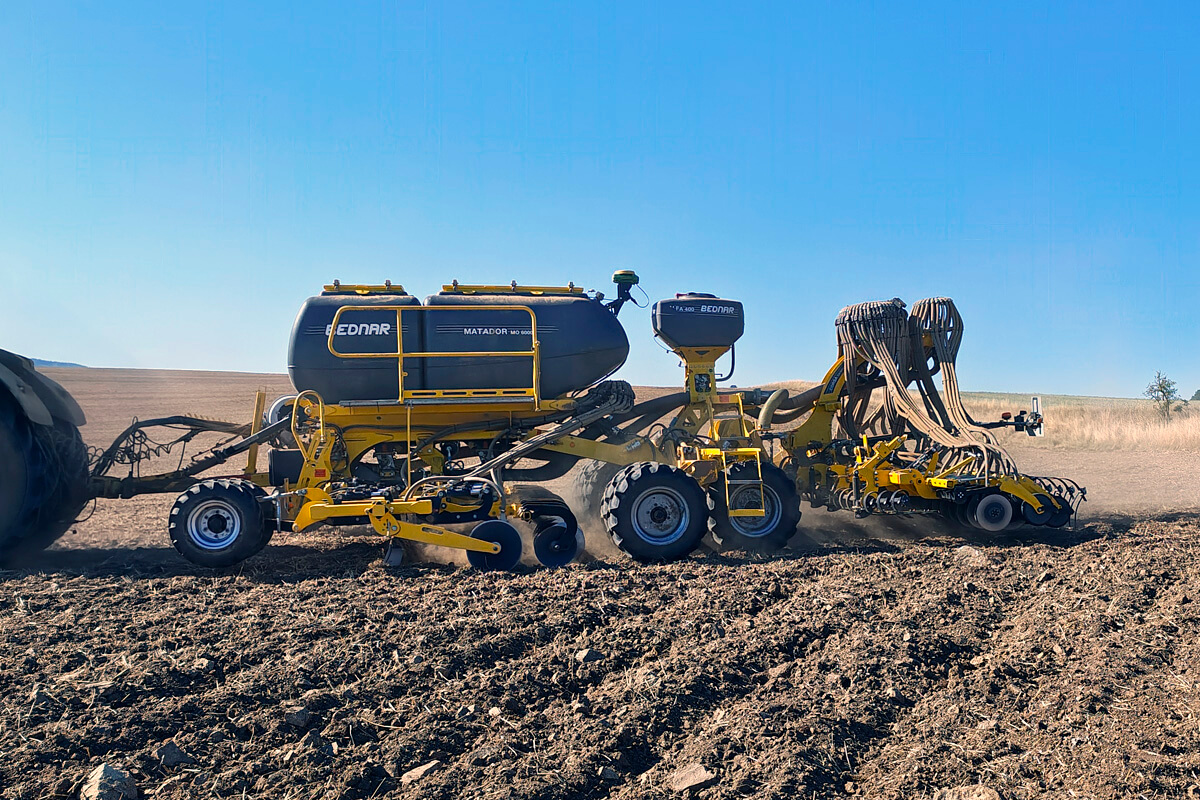
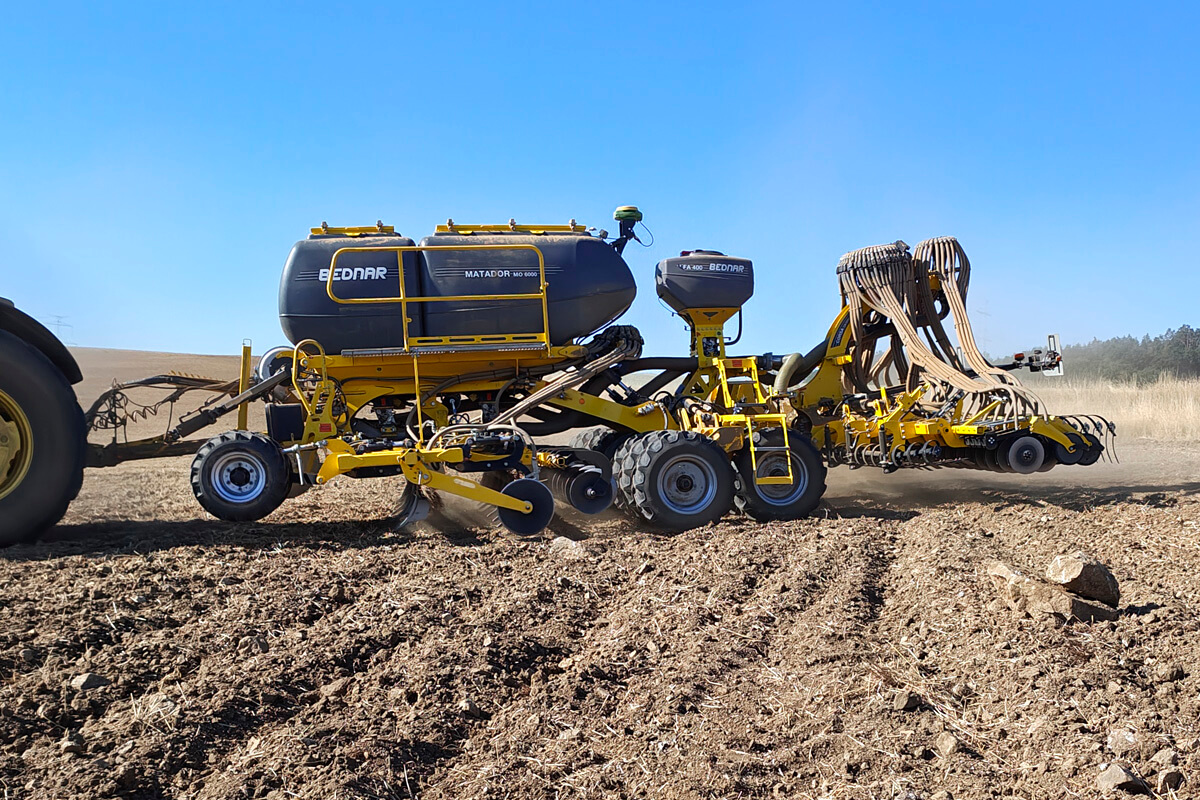
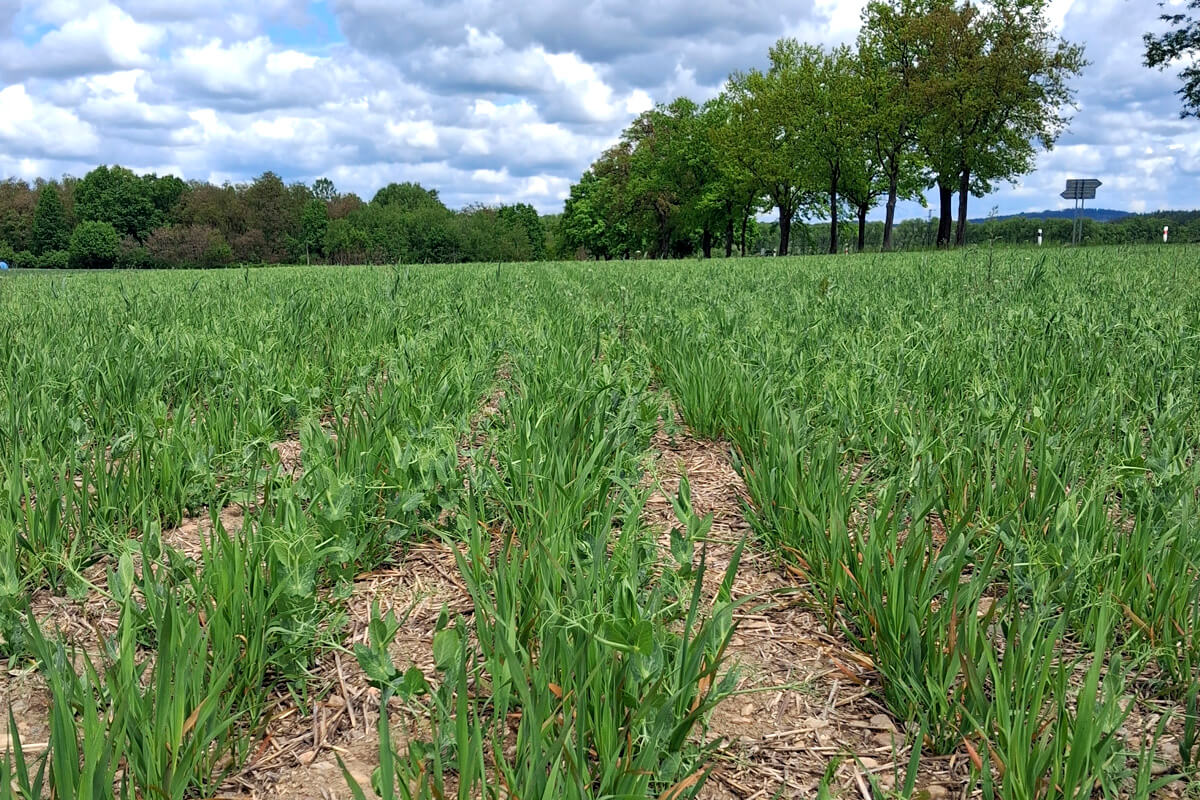
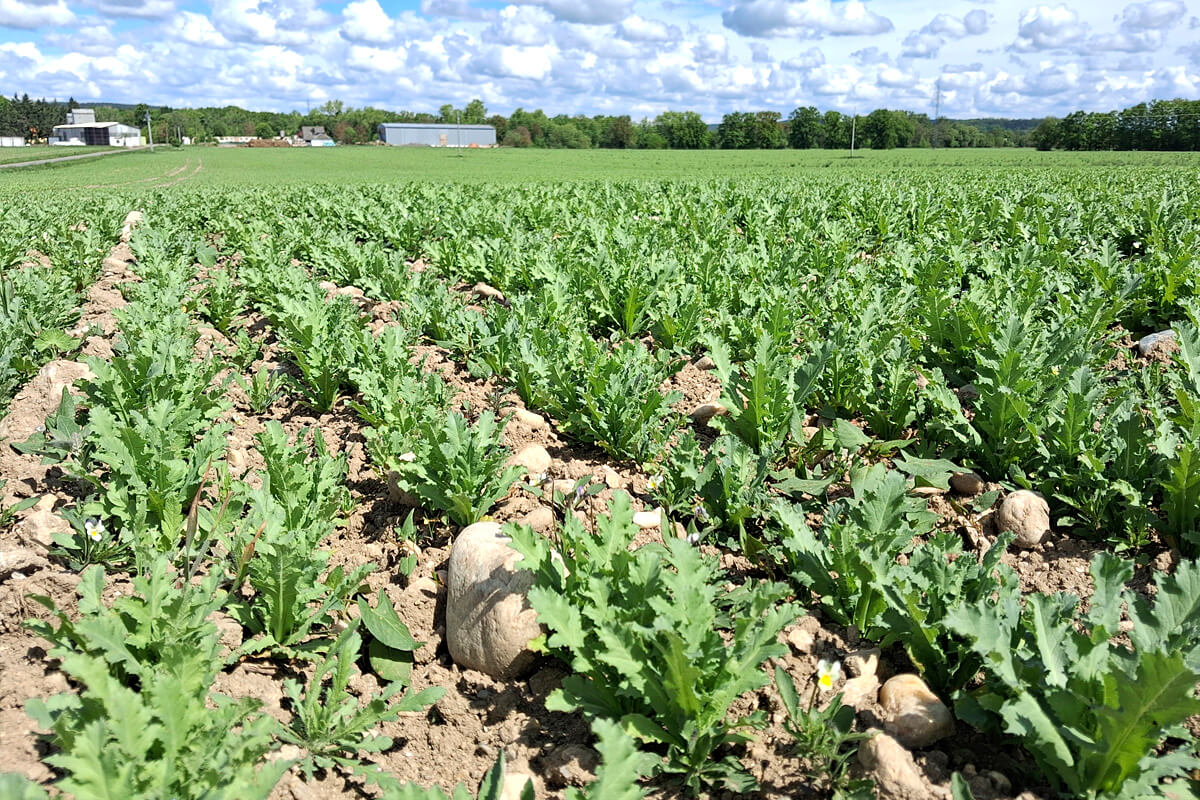
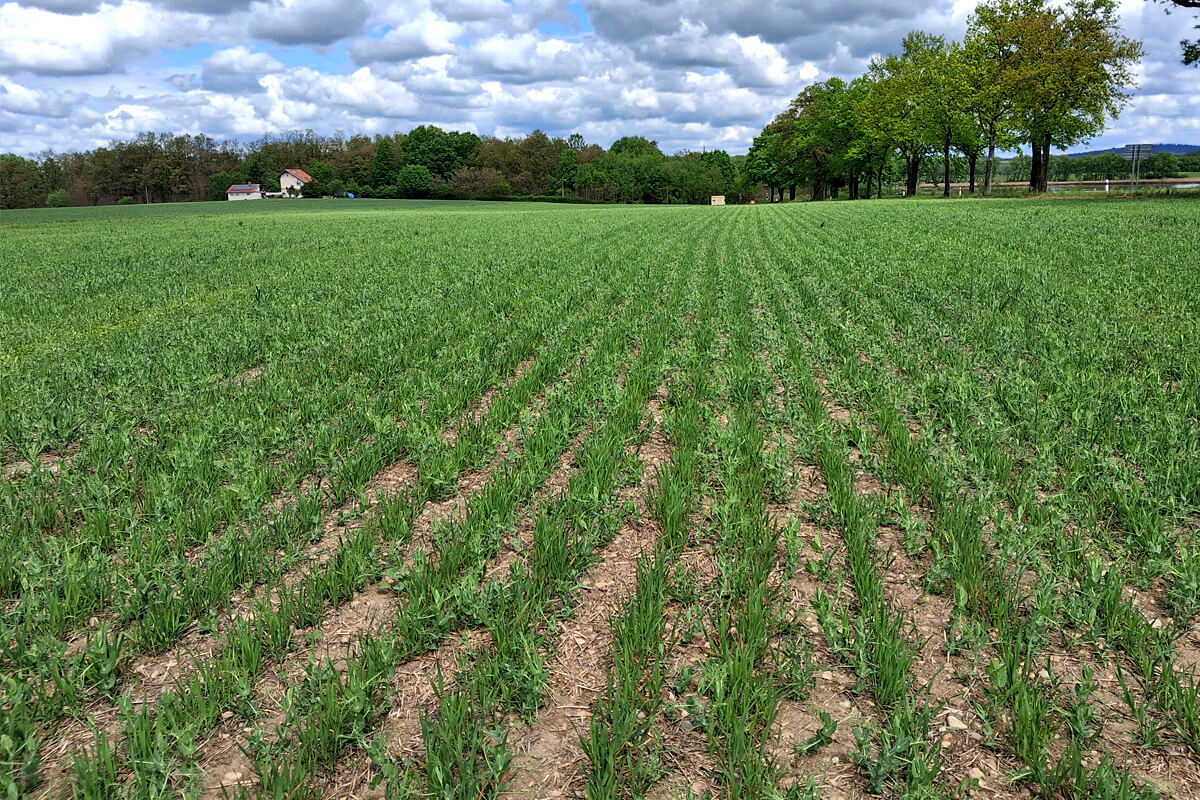
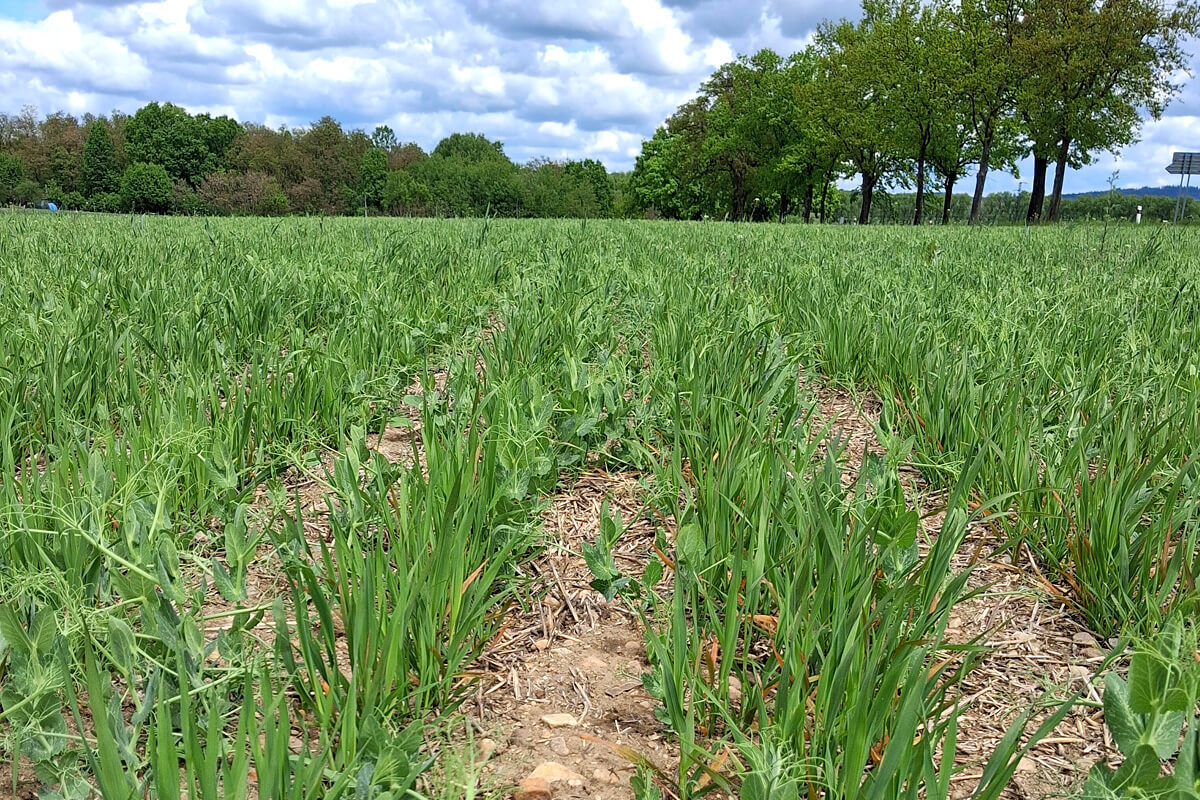
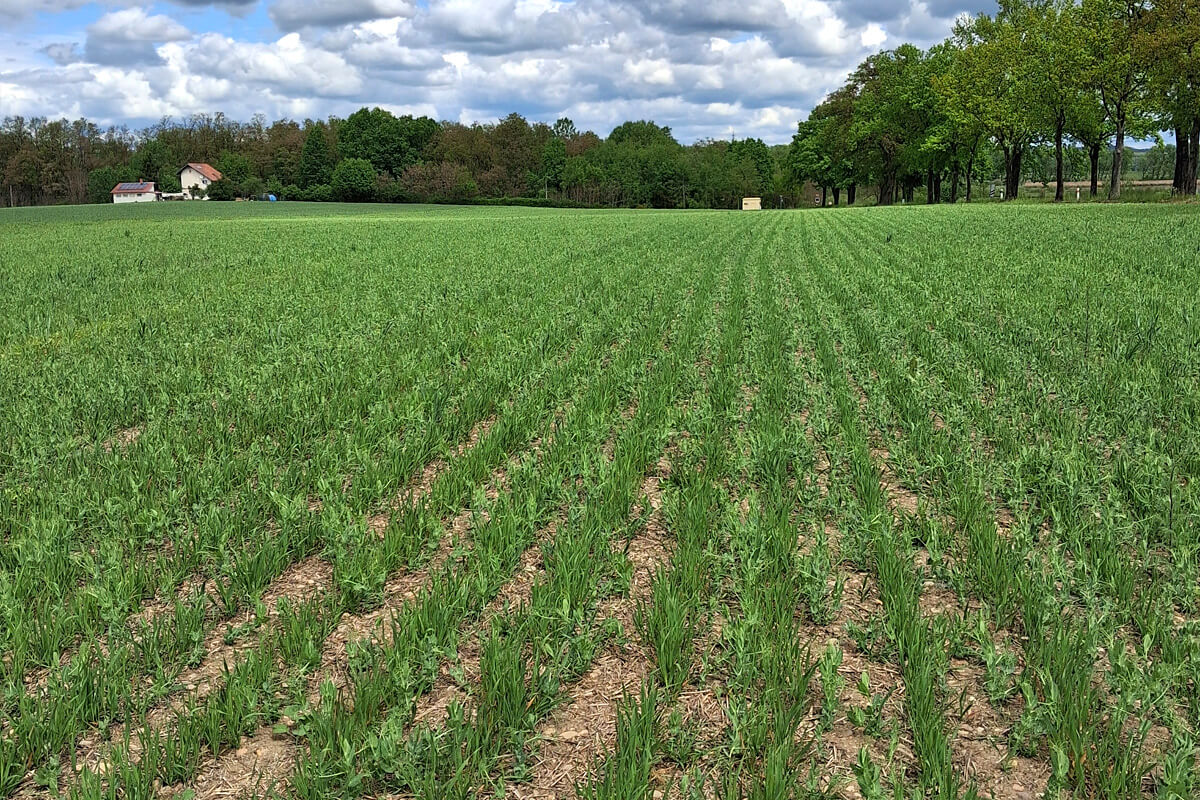
One of the monitored crops was triticale. The preceding crop was oilseed rape and the soil was classed as medium‑heavy.
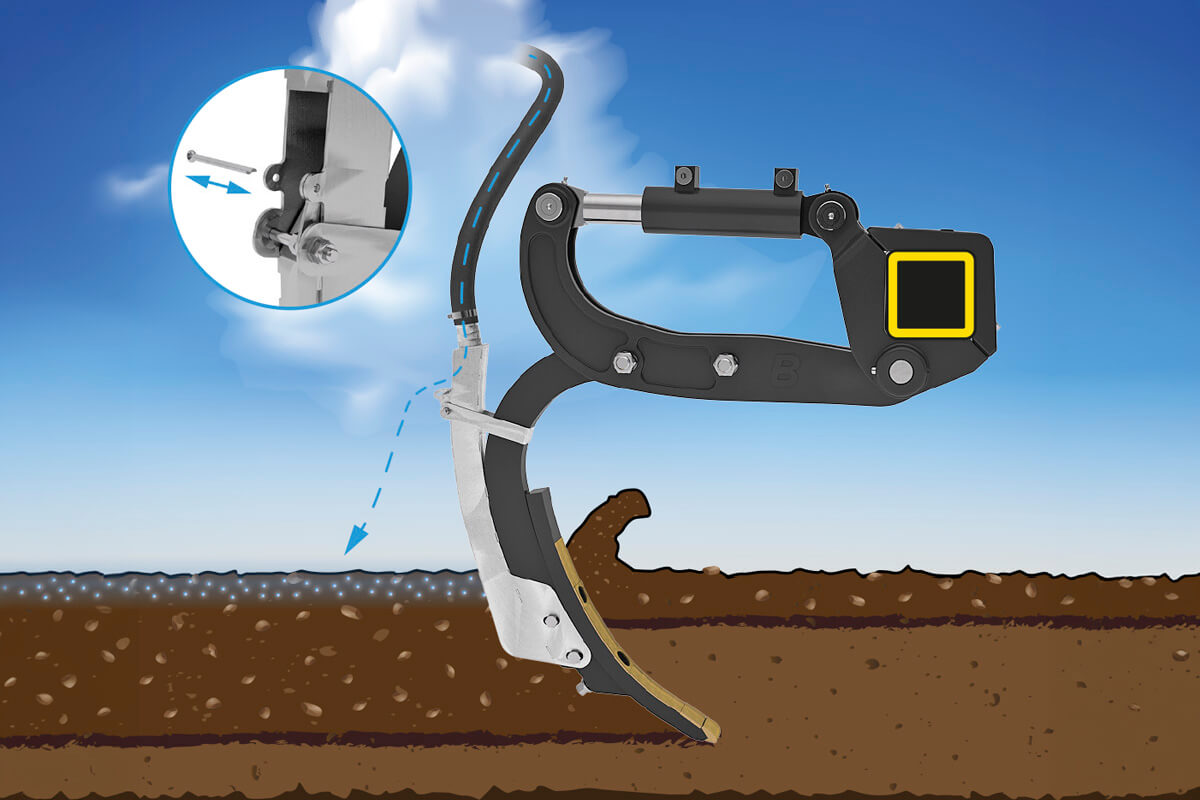
After stubble cultivation to 8 cm depth and subsequent deeper tillage, seeding with MATADOR took place on 29 September 2025. The loosening legs operated at 25 cm depth, the deepest of the three monitored variants.
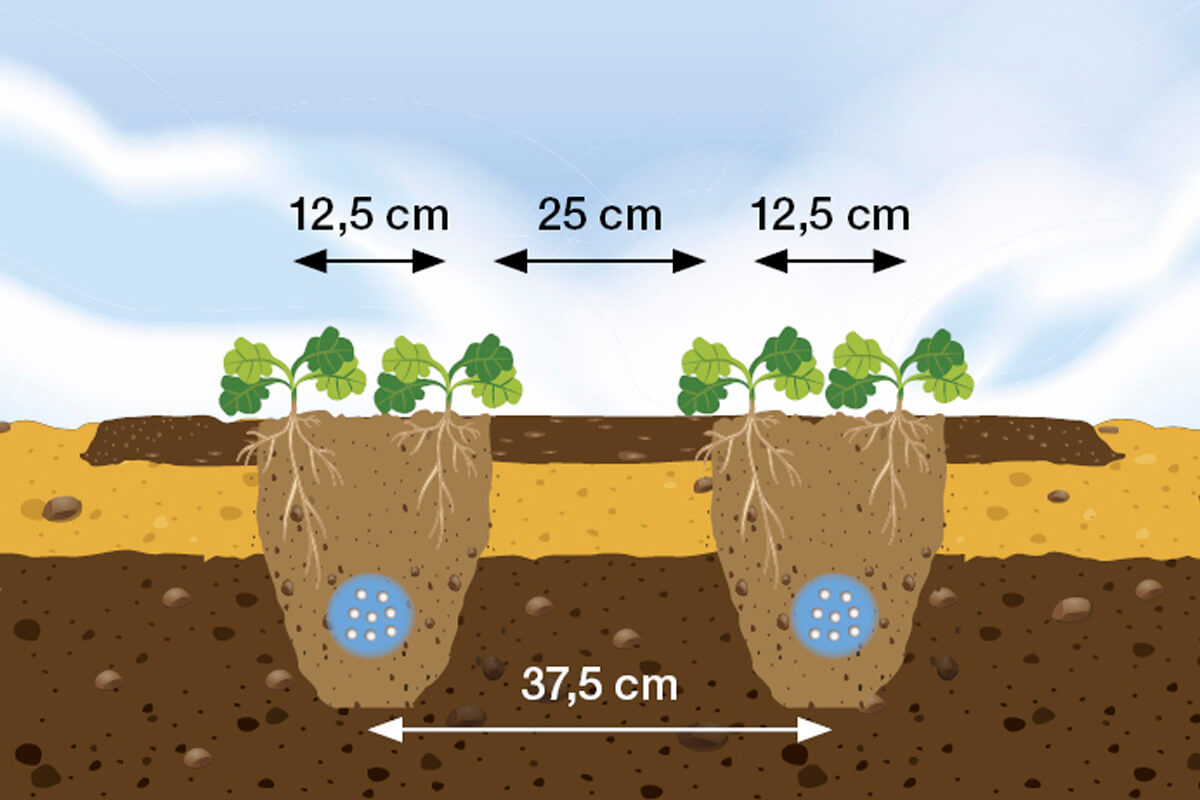
The seeding coulters were set to a spacing of 12.5 cm and the seed rate was 230 kg/ha.
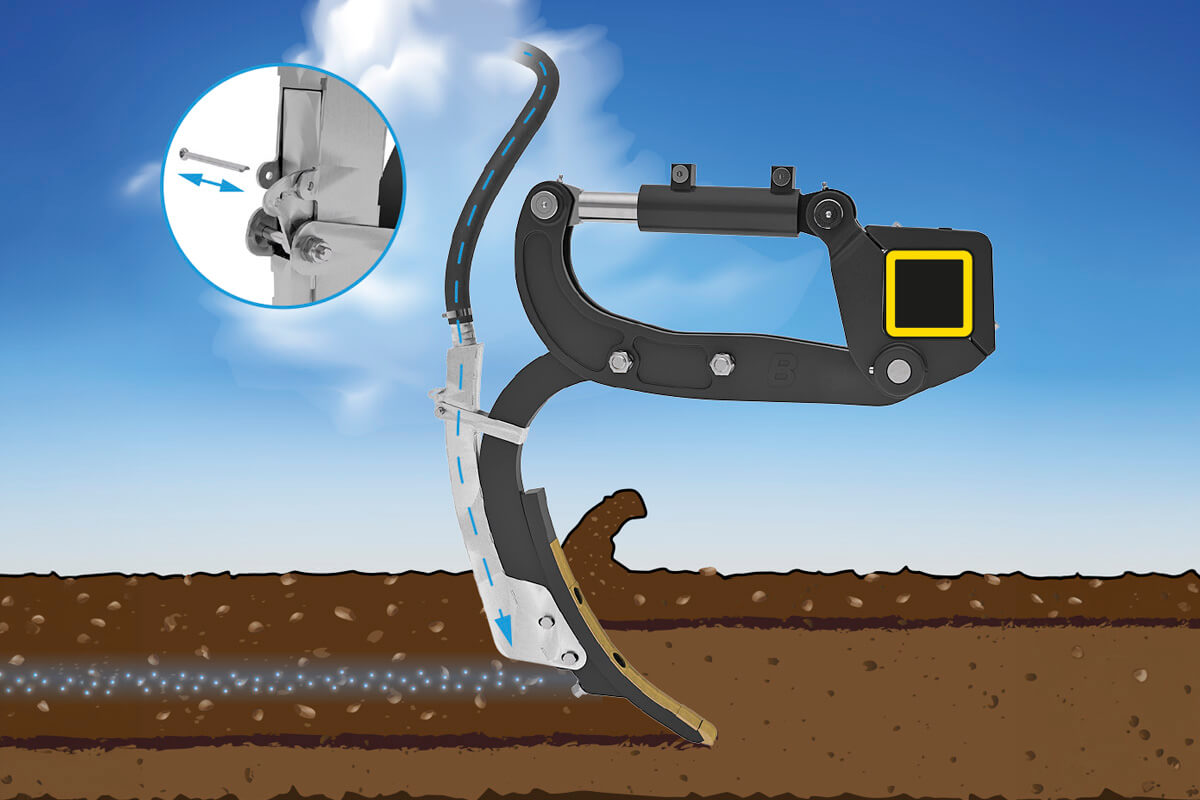
The 25 cm working depth is particularly notable given the dry season. The strip created by the leg provided the roots with a relatively deep loosened zone in which they could develop downwards.
During seeding, MATADOR simultaneously applied an NPK 15‑15‑15 mixture and Wigor at a rate of 100 + 40 kg/ha. The fertiliser was placed at approximately 10 cm depth.
This creates another agronomically interesting combination: roots not only have space to grow deeper, but nutrients are placed below the seed and the roots must penetrate the loosened layer to reach them.
This is important in dry periods, because the surface soil can lose moisture rapidly, reducing the potential for effective nutrient uptake from that layer.
Triticale ultimately yielded 7.08 t/ha.
 English
 Čeština
 Українська
 polski
 Français
 Deutsch
 Română
 English – US
 Magyar
 Italiano
 Dansk
Dansk Lietuvių
.png) English – CA
English – CA Español
 Български
 Русский
 BEDNAR FMT