English – US
 Čeština
 Українська
 English
 polski
 Français
 Deutsch
 Română
 Magyar
 Italiano
 Dansk
 Lietuvių
.png) English – CA
 Español
 Български
 Русский
 BEDNAR FMT


TILLCUT TE
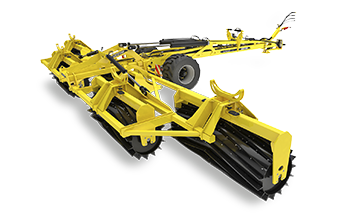

24' 7" -41' ft

150-360 hp
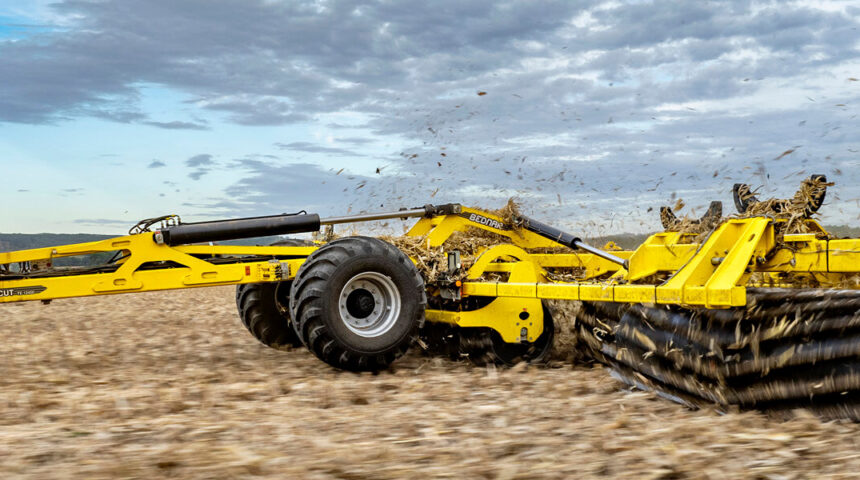
TILLCUT TE cutting rollers offer a fast, cost-effective and soil-friendly solution for mechanically managing crop residues, cover crops and soil. This page explains the conditions suited to the implement and the agronomic and environmental benefits of this approach. It also covers important risks and limitations to help select optimal settings for maximum field efficiency.
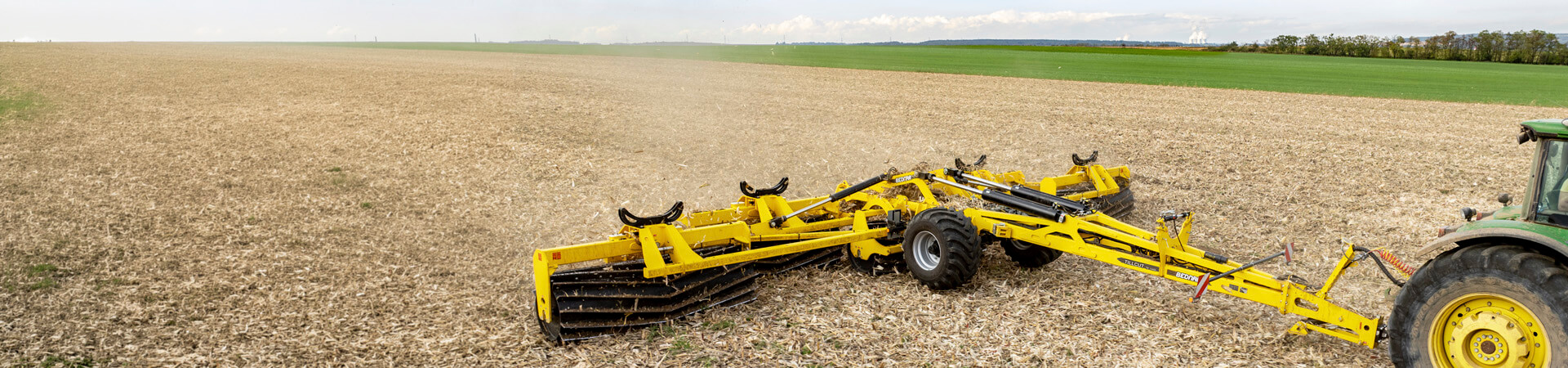
TILLCUT TE cutting rollers are designed to cut and partially incorporate crop residues while providing a vertical tillage effect. They work where the soil surface gives firm support against the roller blades and plant material is not excessively wet. The technology fits conventional, reduced-tillage, no-till and regenerative production systems that aim to leave some biomass on the surface, protect the soil and speed up residue decomposition.
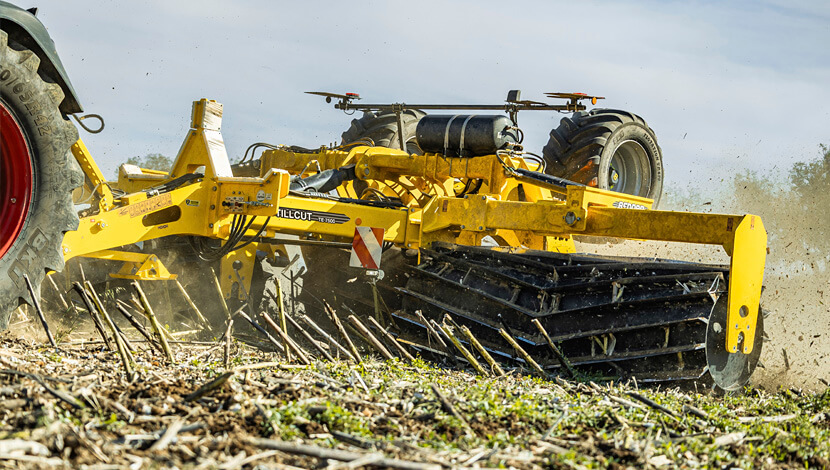
suited to rolling fields after seeding to improve seed-to-soil contact and reduce soil moisture evaporation. It is also useful for maintaining permanent grassland after winter by leveling the surface and reducing the risk of damage to forage and hay harvesting equipment.
designed to handle tough crop residues and mechanically manage vegetation cover.
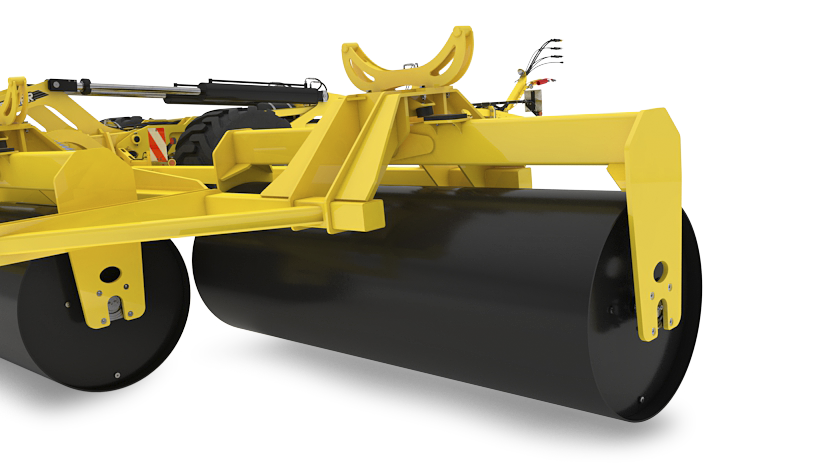
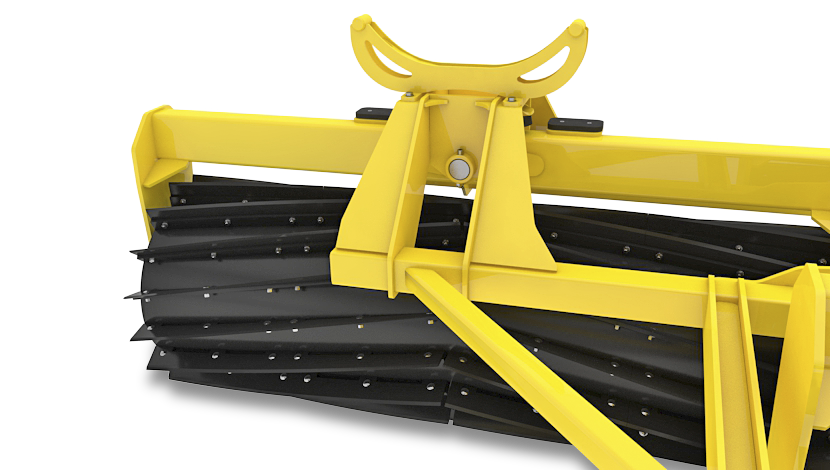
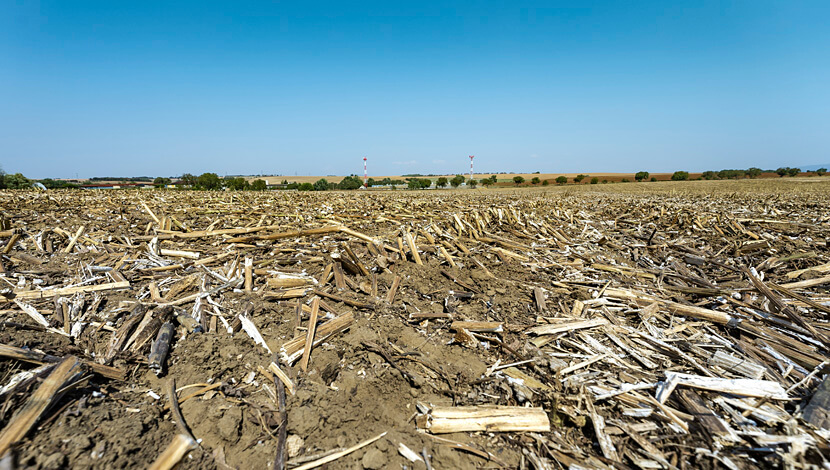
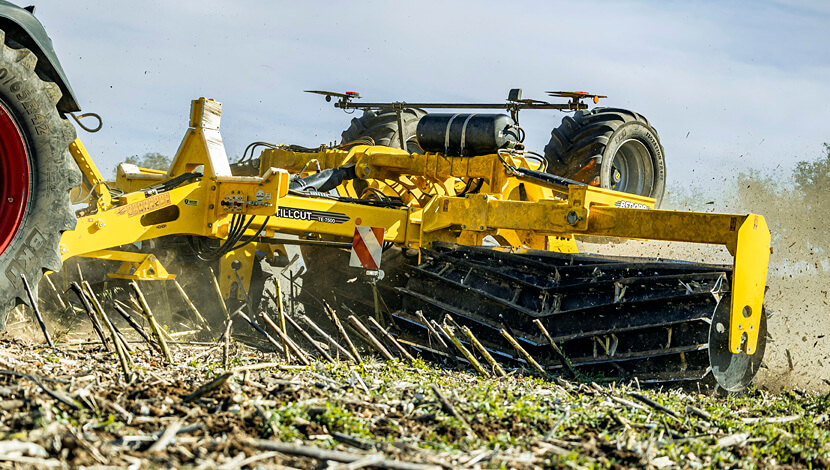
When corn stubble is treated, residues are bent over, stalks are broken and leaves, husks and other plant material are distributed evenly across the soil surface. This helps reduce conditions favorable for European corn borer overwintering.
After harvest, the roller breaks up stem residues, helps release volunteer seeds from the straw and places them in the upper soil layer. This encourages fast, more uniform emergence of volunteer canola in a single flush, simplifying later control.
Thick stems are knocked down and cut, reducing the volume of residues on the soil surface. Breaking them up makes the next field operation easier and reduces the risk of equipment plugging.
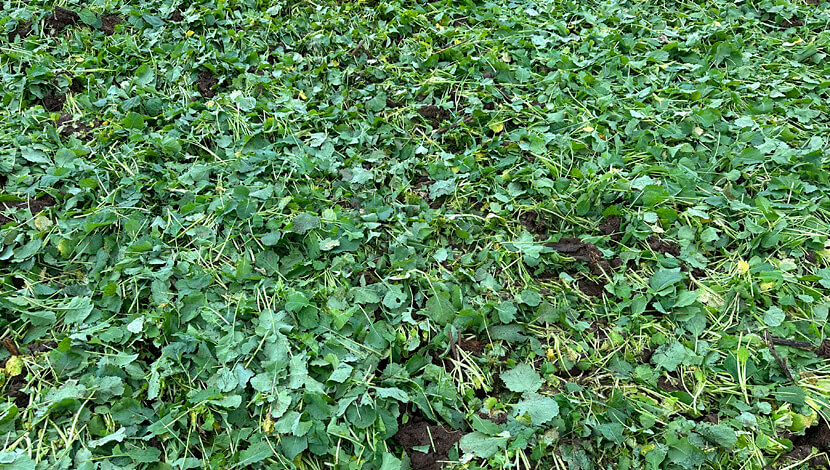
TILLCUT TE rolls and cuts the crop and limits regrowth. The technology can create a terminated vegetation cover before seeding, particularly when biomass is to remain on the surface as protective mulch.
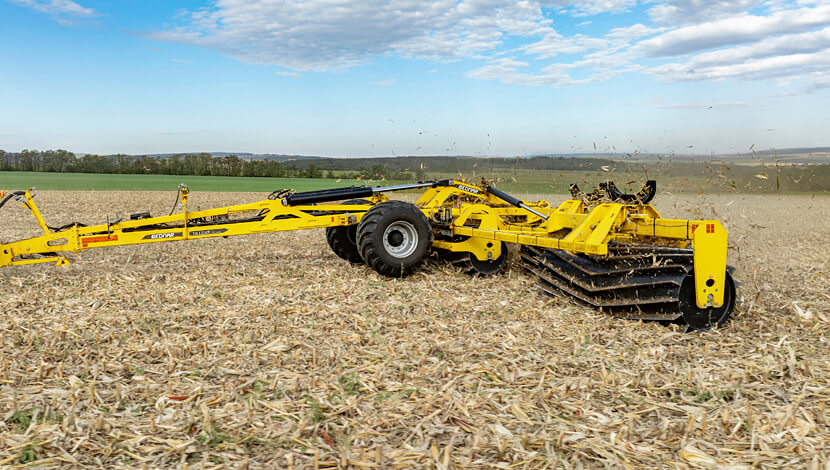
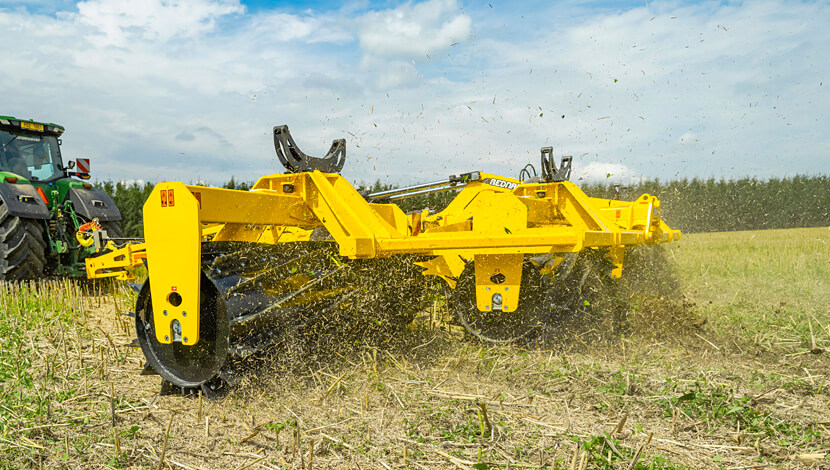
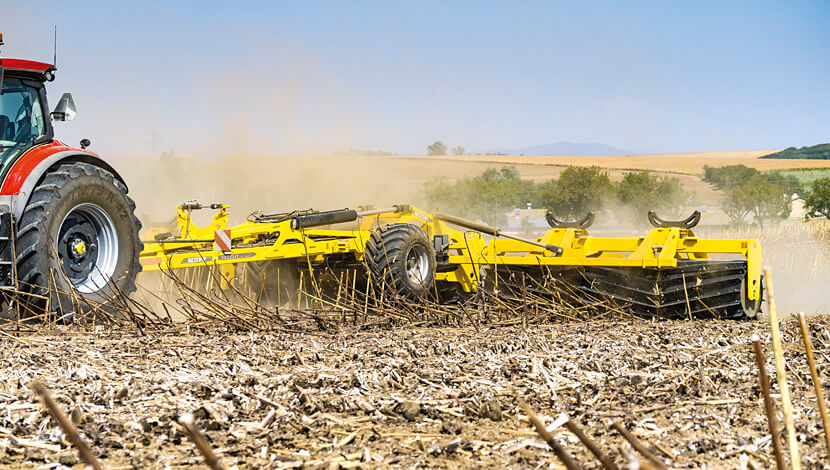
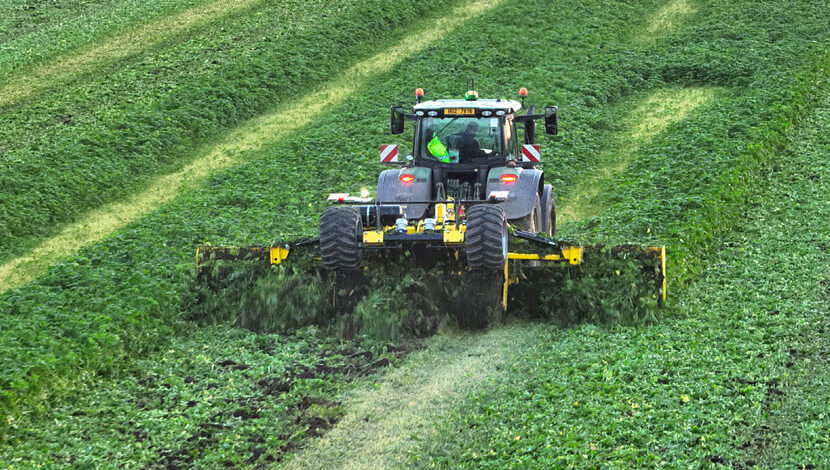
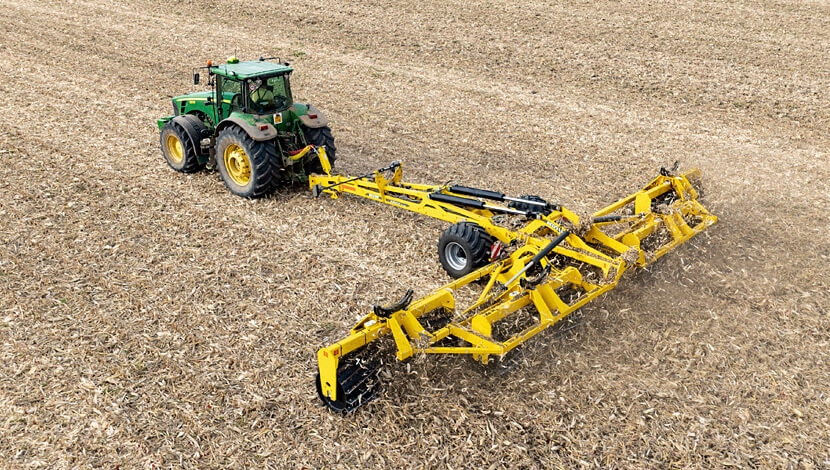
TILLCUT TE is designed for shallow tillage of the upper soil layer, typical of vertical tillage systems. It minimizes disruption of soil structure, particularly in the horizontal direction. Only the very topsoil is loosened, while soil capillarity remains intact. This helps retain moisture, limit erosion and provide excellent conditions for seed emergence. The blade arrangement gradually separates the soil, producing good crumbling and preventing large clods from forming.
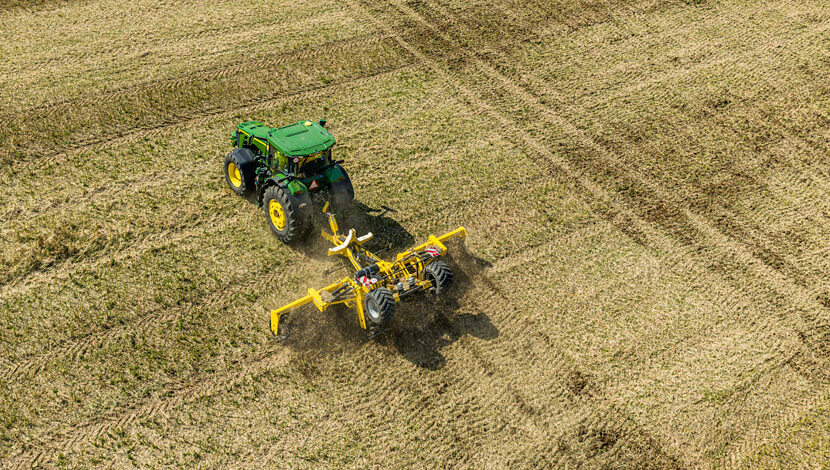
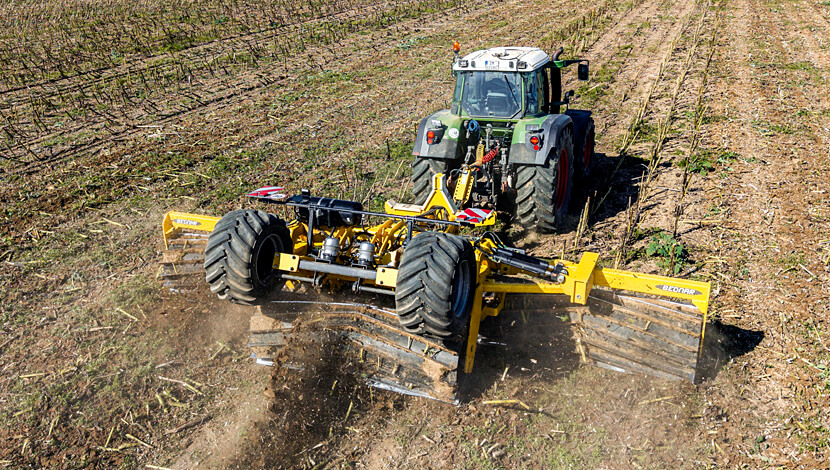
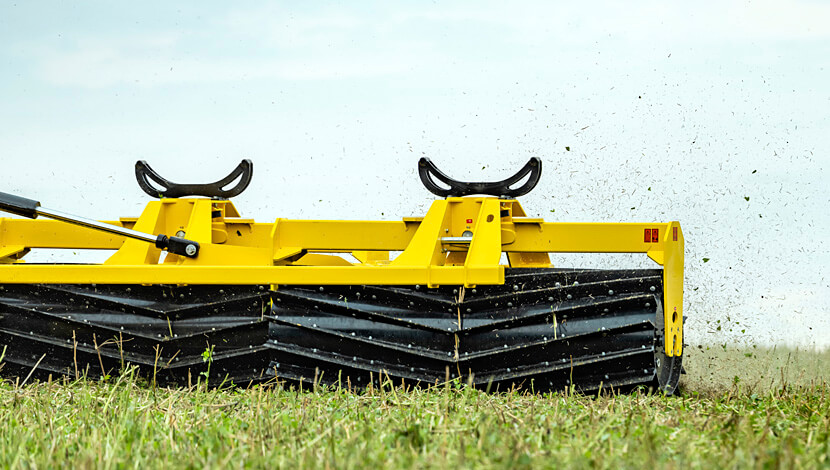
The cutting blades knock down standing crop residues in the direction of travel, then cut or break them. Plant material is spread evenly over the soil surface. Partial incorporation into the soil starts faster decomposition, helping release nutrients back into the soil and reducing conditions favorable for pest overwintering. Cutting rollers also free volunteer seeds and partially position them in the upper soil layer. The resulting more uniform emergence makes later control easier.
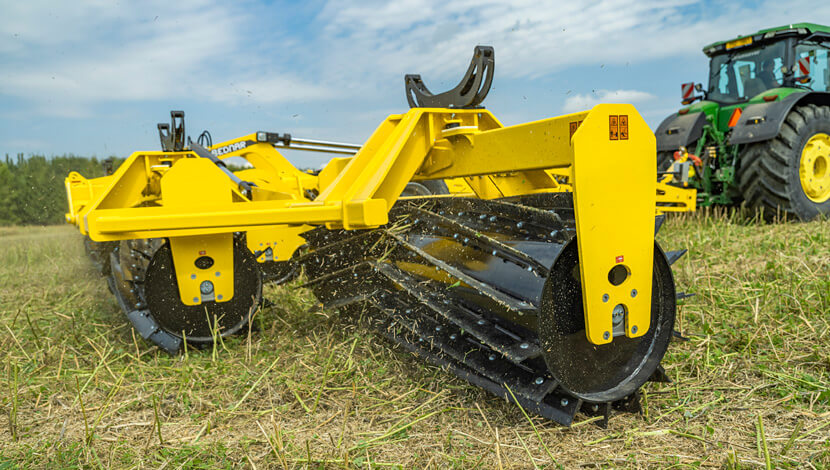
With cover crops and weeds, stems are bent or broken at their base and plants are then cut or extensively fractured. This limits regrowth and simplifies the next field operation. For grass species, effectiveness depends on growth stage. At early stages, growth may only be slowed, whereas termination becomes more effective as the plants mature.
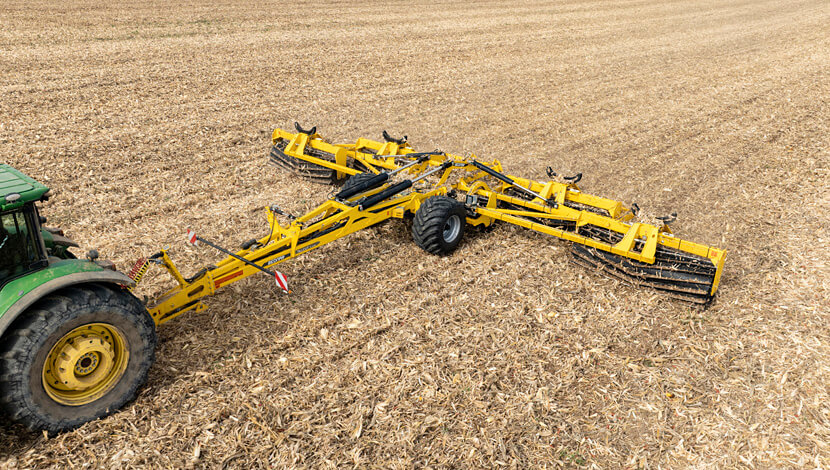
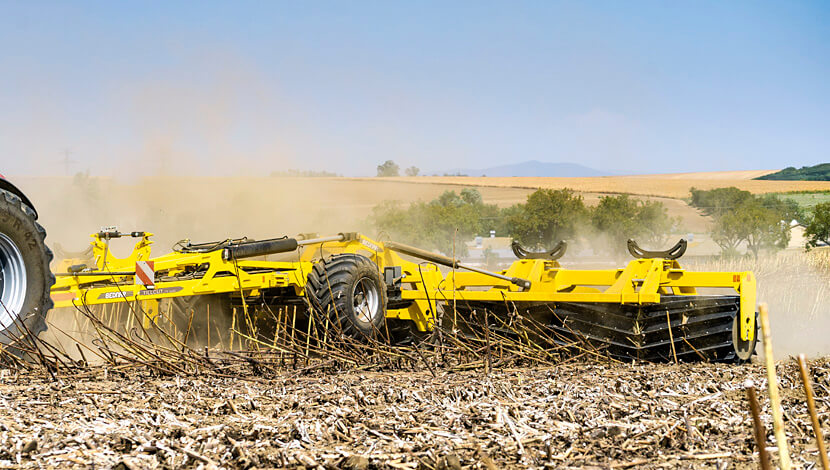
TILLCUT TE can operate at speeds up to 25 km/h with minimal maintenance. The individual rollers follow ground contours independently, ensuring uniform field treatment across the full working width. This operation also uses little fuel, approximately 3 l/ha. Travel speed helps keep the rollers clean while operating.
The cutting rollers perform very shallow vertical tillage and evenly spread crop residues, reducing moisture evaporation into the atmosphere. Residue left on the surface shades the soil and prevents excessive heating. Preserving capillarity beneath the disturbed surface layer helps water from deeper soil layers support rapid emergence of volunteer plants and weeds after harvest.
TILLCUT TE leaves much of the crop residue on the soil surface, where it absorbs raindrop impact energy and reduces wind erosion. Shallow disturbance at blade contact points promotes water infiltration without creating a continuous interface between loosened and undisturbed soil. This lowers the risk of surface runoff and soil loss after heavy rainfall.
TILLCUT TE follows vertical tillage principles by minimizing horizontal disruption of the soil profile and working only the topmost soil in the vertical direction. Independent roller suspension allows the units to follow uneven ground and provide consistent results across the full working width. Limited soil disturbance preserves capillarity, porosity and structural stability.
Mechanical treatment of vegetation and crop residues can sometimes replace or reduce chemical field treatments. The implement mechanically controls weeds in stubble, restricts cover-crop regrowth and encourages rapid emergence of volunteer plants, which can then be managed selectively. It also helps limit conditions favorable for pests to overwinter.
Plant matter left on the surface creates a better microclimate for soil organisms, reduces changes in surface temperature and helps sustain biological activity in the topsoil. Cutting and breaking residues promotes microbial biomass decomposition and the gradual return of nutrients to the soil.
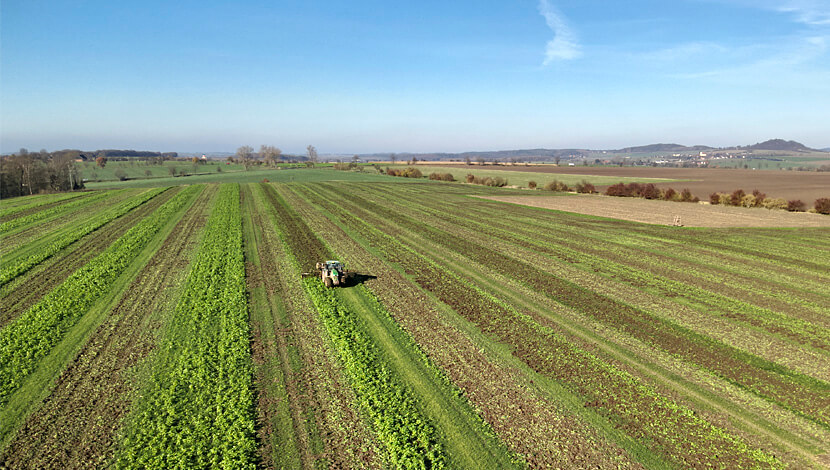
TILLCUT TE suits operations using cover crops, biodiversity strips, fallow fields or substantial surface residue. Mechanically managing vegetation cover helps support more diverse crop rotations, retain protective mulch and reduce tillage intensity. The implement therefore fits regenerative and soil-conservation systems that seek to combine crop production with soil and water protection.
24' 7" -41' ft
150-360 hp